



Photo Gallery
BCS 1 | BCS 2 | BCS 3 | BCS 4 | BCS 5 | BCS 6 | BCS 7 | BCS 8 | BCS 9
BCS1
No photos available.
Bone structure of shoulder, ribs, back, hooks and pins is sharp to the touch and easily visible. Little evidence of fat deposits or muscling.
BCS 2
No photos available.
Little evidence of fat deposition but some muscling in the hindquarters. The spinous processes feel sharp to the touch and are easily seen with space between them.
BCS 3
Beginning of fat cover over the loin, back and foreribs. The backbone is still highly visible. Processes of the spine can be identified individually by touch and may still be visible. Spaces between the processes are less pronounced.
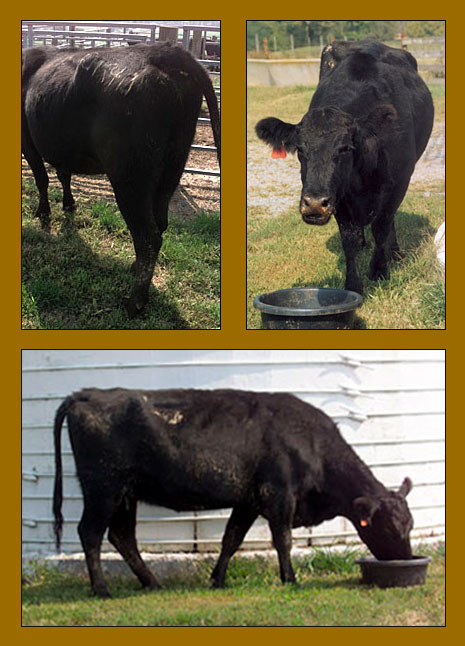
BCS 4
Foreribs are not noticeable but the 12th and 13th ribs are still noticeable to the eye, particularly cattle with a big spring of rib and width between ribs. The transverse spinous processes can be identified only by palpation (with slight pressure) and feel rounded rather than sharp. Full, but straight muscling in the hindquarters.
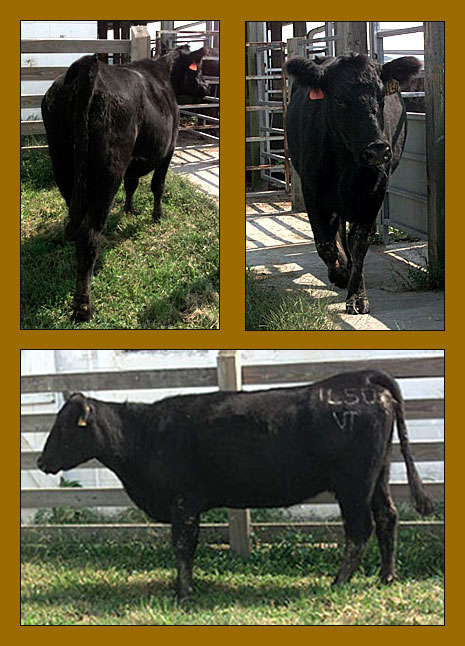
BCS 5
The 12th and 13th ribs are not visible to the eye unless the animal has been shrunk. The transerse spinous processes can only be felt with firm pressure and feel rounded but are not noticeble to the eye. Spaces between the processes are not visible and are only distinguishable with firm pressure.Areas on each side of the tail head are well filled but not mounded.
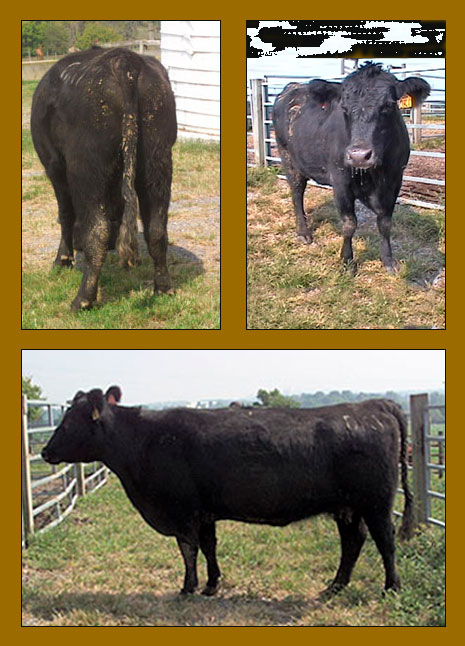
BCS 6
Ribs are fully covered and are not noticeable to the eye. Hindquarters are plump and full. Noticeable sponginess over the foreribs and on each side of the tail head. Firm pressure is now required to feel the transverse processes.
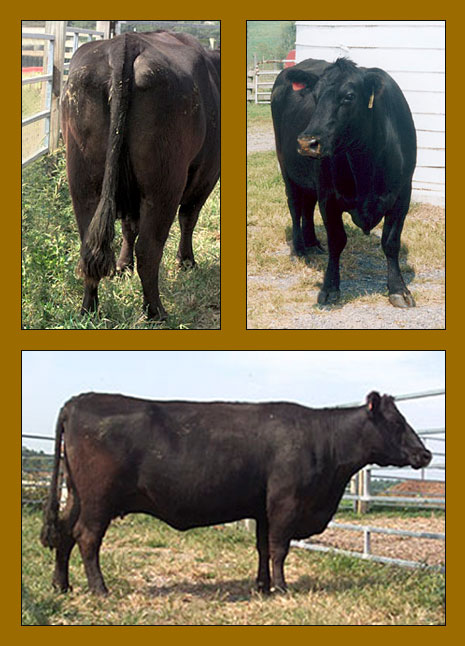
BCS 7
Ends of the spinous processes can only be felt with firm pressure. Spaces between processes can barely be distinguished. Abundant fat cover on either side of the tail head with evident patchine
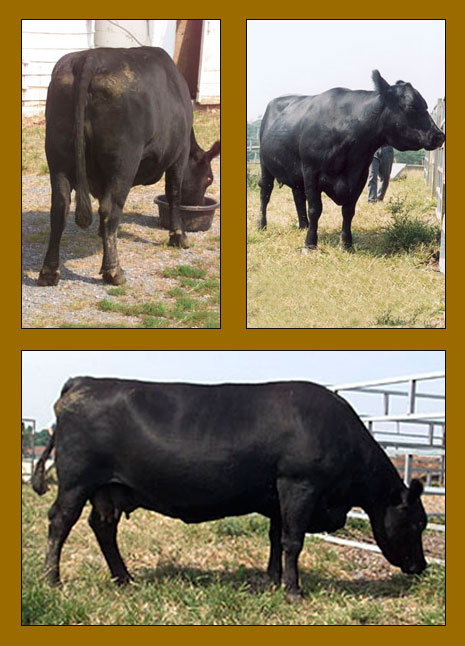
BCS 8
Animal takes on a smooth, blocky appearance. Bone structure disappears from sight. Fat cover is thick and spongy and patchiness is likely.
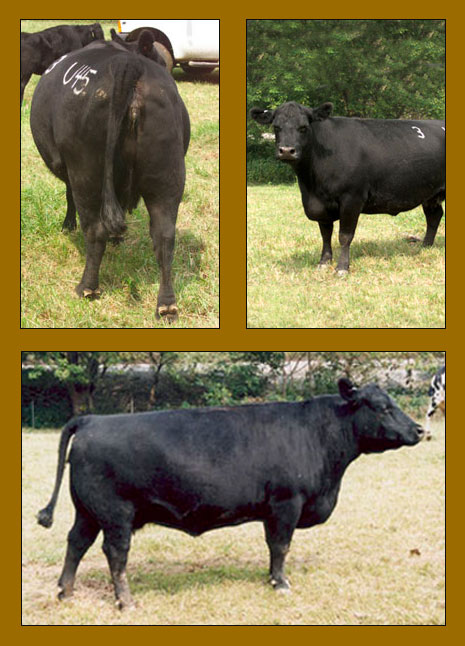
BCS 9
Bone structure is not seen or easily felt. The tail head is buried in fat. The animal's mobility may actually be impaired by excessive fat.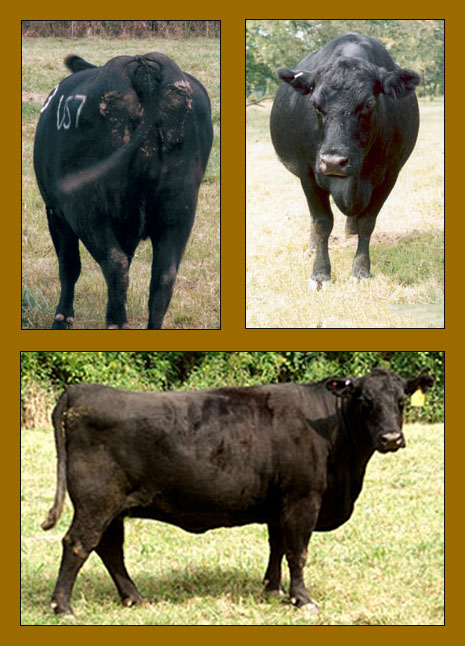
BCS 1 | BCS 2 | BCS 3 | BCS 4 | BCS 5 | BCS 6 | BCS 7 | BCS 8 | BCS 9
Editor's Note: The articles used within this site represent a mixture of copyrights. If you would like to reprint or repost an article, you must first request permission of Angus Productions Inc. (API) by contacting the editor at 816-383-5200; 3201 Frederick Ave., Saint Joseph, MO 64506. API claims copyright to this web site as presented. We welcome educational venues and cattlemen to link to this site as a service to their audience.